The facade is the only part of a building that works after everyone has left. At night, it is all anyone sees of it.
Wash a wall with hard light from a distance and it flattens, losing everything that made it interesting. Let the light graze close to the surface, from below or from one edge, and stone, concrete, brick and metal cast their own shadow — the facade gains depth. That is the first and most important choice: grazing close to the surface for texture, washing from a distance for smooth, uniform surfaces. Most weak facades are the second approach applied to the first situation.
In-ground units at the base for columns and vertical surfaces. Wall lights for rhythm and entrances. Narrow-beam floodlights from a distance for tall or singular elements. Linear profiles concealed in a reveal, a frame or an eave, where the light should look as if it comes from the architecture itself. The choice depends on height, material and how close the fixture can sit — and that last one is settled with the architect, not after them.
Light stone and brick come alive at 2700K–3000K; the same surfaces under 4000K look cold and clinical. Concrete and metal hold neutral light well. Planting around a building needs a different temperature from the facade itself — otherwise the trees come out grey. So a facade is rarely lit at a single temperature; the split is part of the design.
Facade fixtures face rain, frost, sun and — on the coast — salt. IP65 is the minimum; in-ground units need IP67 and real drainage beneath them. Just as important is access: a fixture on the sixth floor that cannot be reached without scaffolding will never be repaired. Putting the drivers somewhere reachable, rather than behind render, is the decision that keeps a facade lit after year three.
A badly aimed floodlight lights the sky, the neighbour’s windows and the passer-by’s eyes — and wastes exactly the light you are paying for. Aiming angle, shields and position belong in the design, not on site. In residential buildings this is also the most common reason a beautiful facade gets switched off by the residents a few months later.
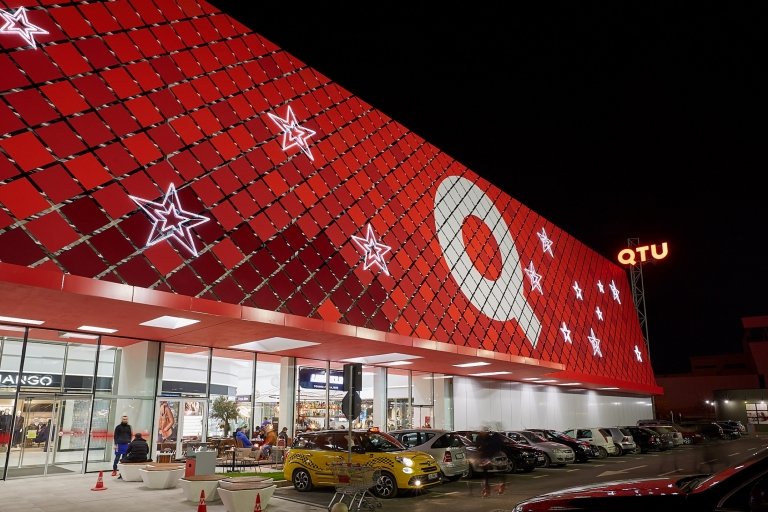
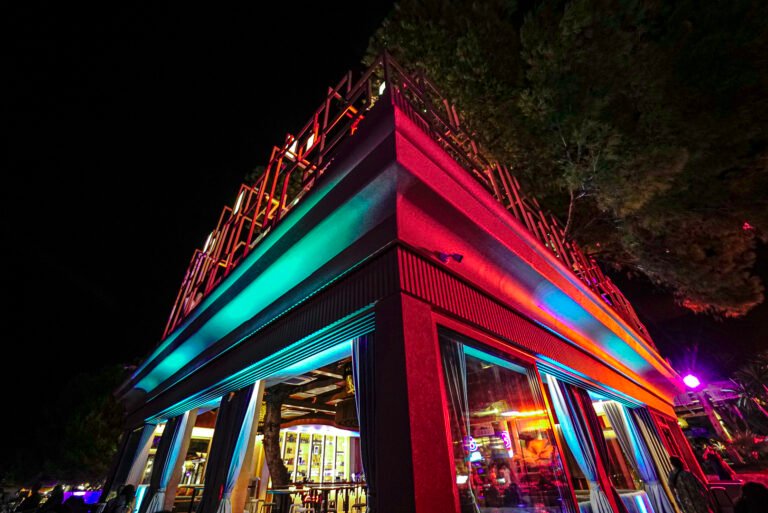
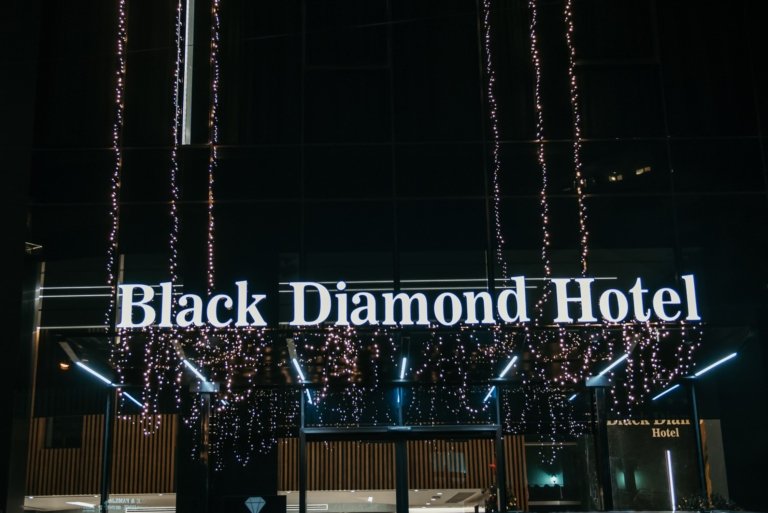
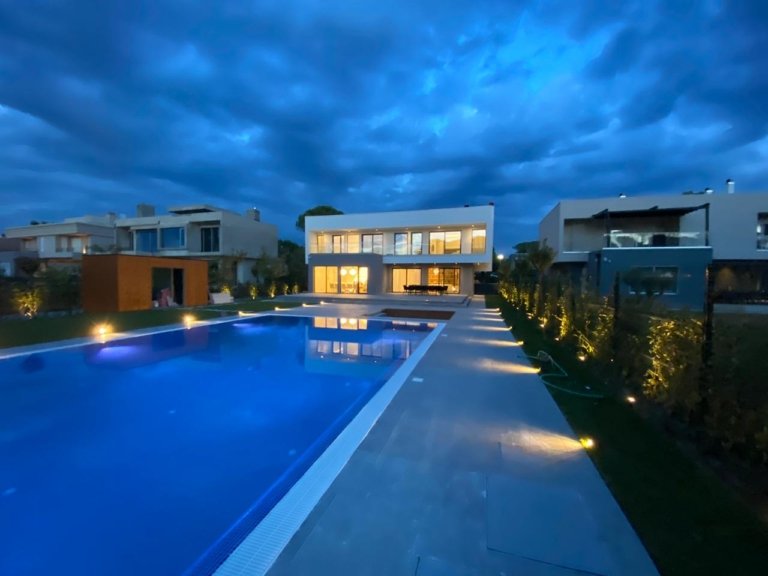
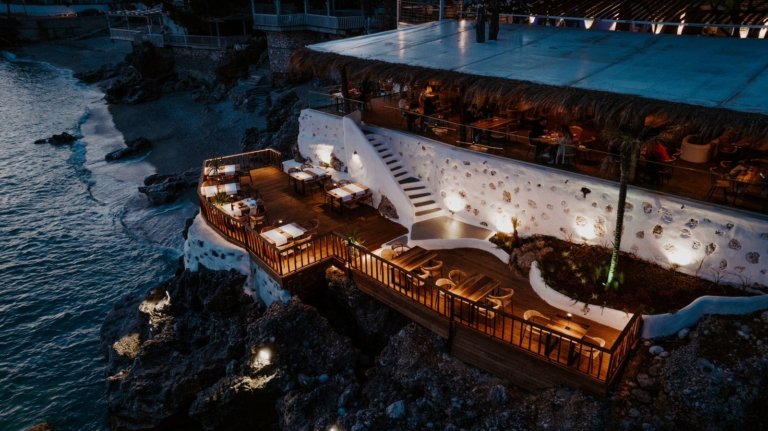
The facade of QTU was lit with GE Lighting — a large perforated surface that becomes the centre’s own sign at night. At Greg Beach Club the facade works in colour and reads from the beach. At Teuta Gold and Black Diamond Hotel the exterior lighting is what makes the business stand out from the street. And at the Villa at Gjiri i Lalzit, wall-washers and planting lights bring the volume of the house forward above the pool.
At design stage, together with the architecture. In-ground units need bases and drainage, concealed ones need reveals in the render, and all of them need conduit. Once the facade is finished, only distant floodlights remain possible — the weakest of all the options.
Yes, with RGB or RGBW fixtures under DMX control. That makes sense for shopping centres, clubs and public buildings that want scenes for holidays or events; for a corporate building, well-executed white light usually looks more expensive than colour.
Far less than expected, if it is LED with precise optics and on a schedule. A well-designed facade comes on after sunset and dims or switches off after midnight — set once, in the control system.
Send us the plan or a few photos. We will tell you what the space needs — not what the catalogue happens to have.