The spotlight is the most used and most misused fixture there is. Most ceilings have twice as many spots as they need, placed where they are not needed.
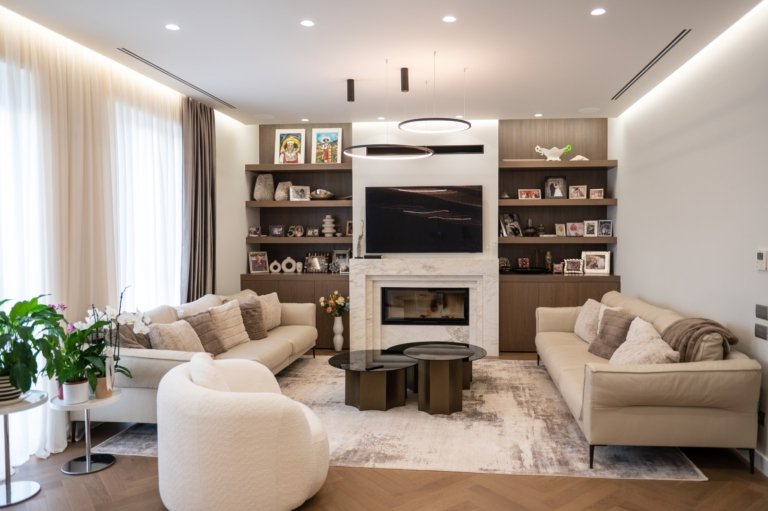
A narrow beam, around 24 degrees, brings something forward — a painting, a product, a stone wall. A wide one, 60 degrees and up, fills the space. Most ceilings here have only the second kind, spread on a grid, and the result is a bright room with no point of interest. A uniform grid is not a lighting design — it is an electrical layout.
If the source is visible when you are seated, the spot is wrong. Good spots set the LED deep inside the body, with a reflector or a dark cone, precisely so it cannot be seen. That is the real difference between a cheap spot and a professional one — not the wattage, but how well it hides the source. In offices this is measured as UGR; in a restaurant or a living room it is measured by eye, and it registers immediately.
With GU10 you change the lamp yourself, with no electrician, and you can change colour temperature or beam later. With an integrated LED the fixture is slimmer, visually quieter and usually more efficient, but when it ends you replace the whole unit. For a home we usually advise GU10. For retail and projects where the look comes first, integrated.
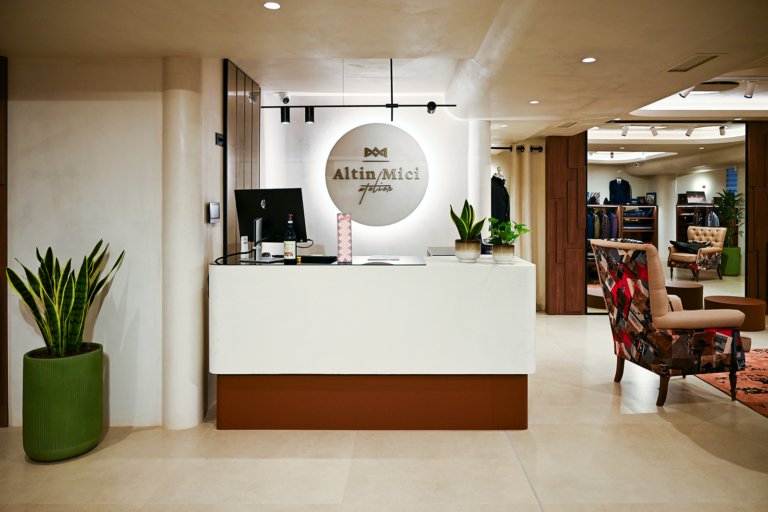
Seventy-nine projects — the largest category in our portfolio. Narrow-beam recessed spots over the displays at Teuta Gold and Argjendari Algi, track spots at Altin Mici Atelier and Mattis Hotel, and tight beams over the tables at Hortus Hotel.
Fewer than you think, provided there are other layers of light. The number does not come from a formula per square metre but from what actually needs lighting: the counter, the table, the artwork, the corridor. The rest of the ceiling can stay empty.
For homes and restaurants, 2700K to 3000K. For offices and clinics, 4000K. What matters most is not mixing two temperatures in the same space — that is the mistake that shows more than any other.
Usually yes, provided the cut-out diameter matches or is slightly smaller than the new spot. That is why the existing cut-out diameter is the first thing we ask for on a replacement job.
Send us the plan or a few photos. We will tell you what the space needs — not what the catalogue happens to have.