Colour is easy to buy and hard to do well. The difference is not the fixture — it is the control, and who programs the scenes.
RGB gives colour, but the white it makes by mixing all three is always poor — fine for a club, not for a space where people stay. RGBW adds a real white chip and solves exactly that. Tunable white gives no colour at all but moves from 2700K to 6500K — and is often what a hotel, an office or a home actually needs, where the ask is not colour but a day that changes.
DMX comes from the stage world and is the standard for facades, clubs and anything where many fixtures must move together precisely. DALI is the building standard, quieter, ideal for zones and scenes in offices and hotels. Simple RF controllers with a remote are enough for one room but not for a project. The choice is made at the start, because it changes the wiring: DMX needs its own data line, and that is not added after the ceilings close.
The fixtures and the controller are the easy part. What makes an installation look professional are the scenes: how slowly it moves from one to the next, how many colours run at once, and when they come on. A facade that changes colour every three seconds looks cheap; the same facade with a two-minute transition looks designed. We treat the programming as part of the delivery, not as something the electrician does at the end.
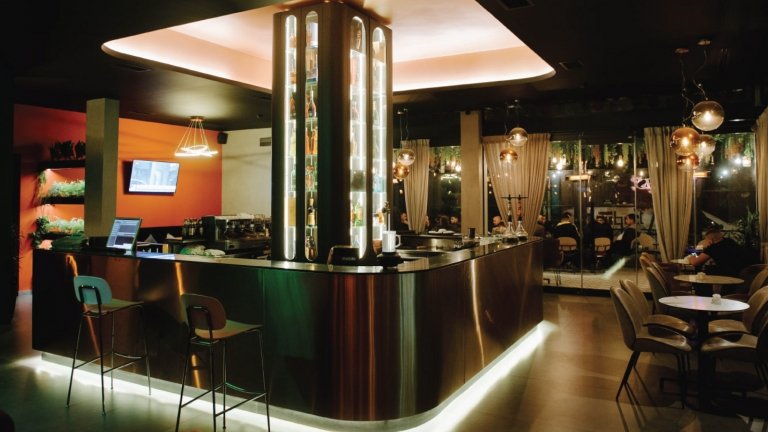
It makes sense on the facades of public and commercial buildings, in bars and clubs, in event spaces, and in retail where the window changes with the season. It does not make sense as the main solution in a restaurant where people eat, an office where people work, or a living room — there colour tires the eye and makes the space look cheaper than it is. In those cases we propose tunable white and dimming rather than RGB, and we say so even when the client asks for the opposite.
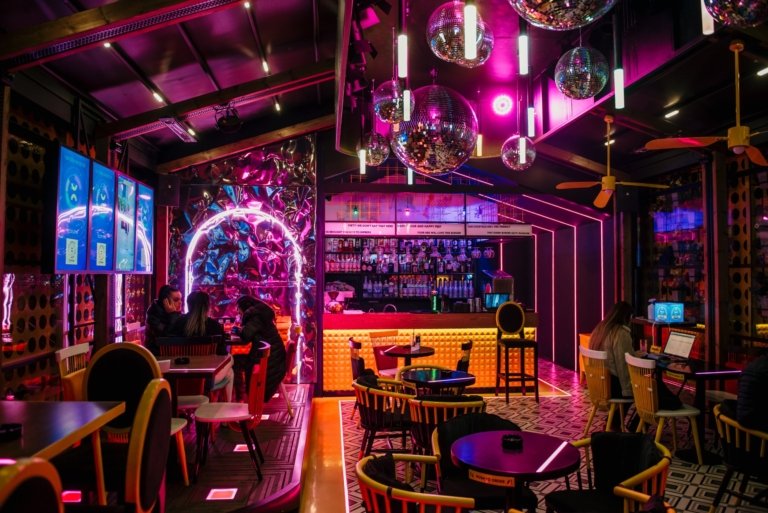
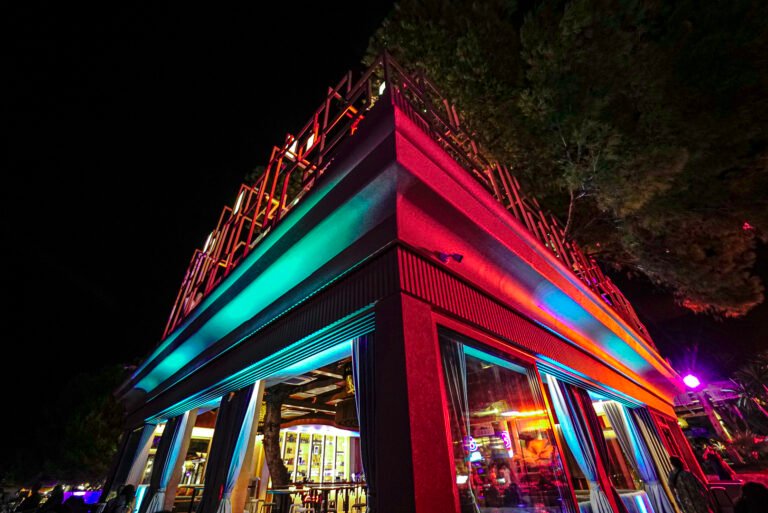
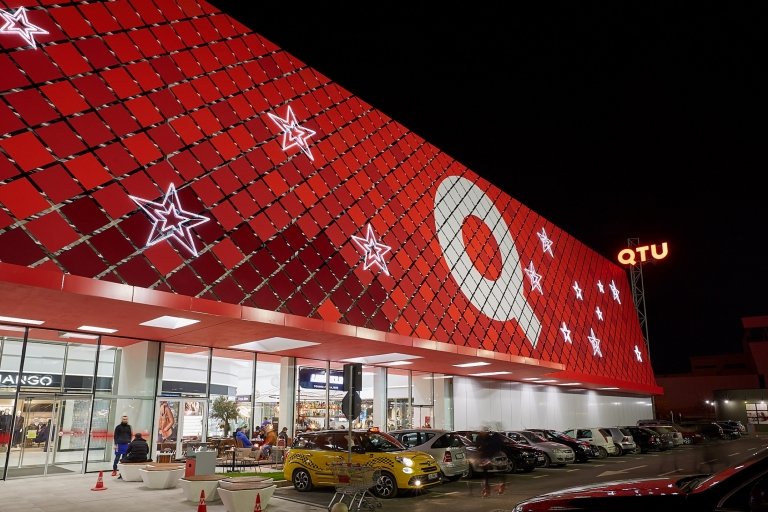
At Twist Bar, recessed RGB profiles draw the geometry of the ceiling and walls; at Yellow Mood the RGB strips are part of the venue’s identity. At a different scale, colour works across the facade at QTU and Greg Beach Club, where the whole volume of the building changes at night.
Only partly. The fixtures can be swapped, but the data line and dimmable drivers need their own wiring. Where the ceiling opens or a free conduit exists, it is feasible; on a finished facade, rarely.
We do, as part of the project, and then hand it over with saved scenes that change at the press of a button. If new scenes are needed later — a holiday, an event — they are added without changing anything physical.
RGBW fixtures cost more than white ones, and the control is a line of its own. But the real cost is the wiring and the programming, which is why the decision is taken early — adding it later costs several times as much.
Send us the plan or a few photos. We will tell you what the space needs — not what the catalogue happens to have.