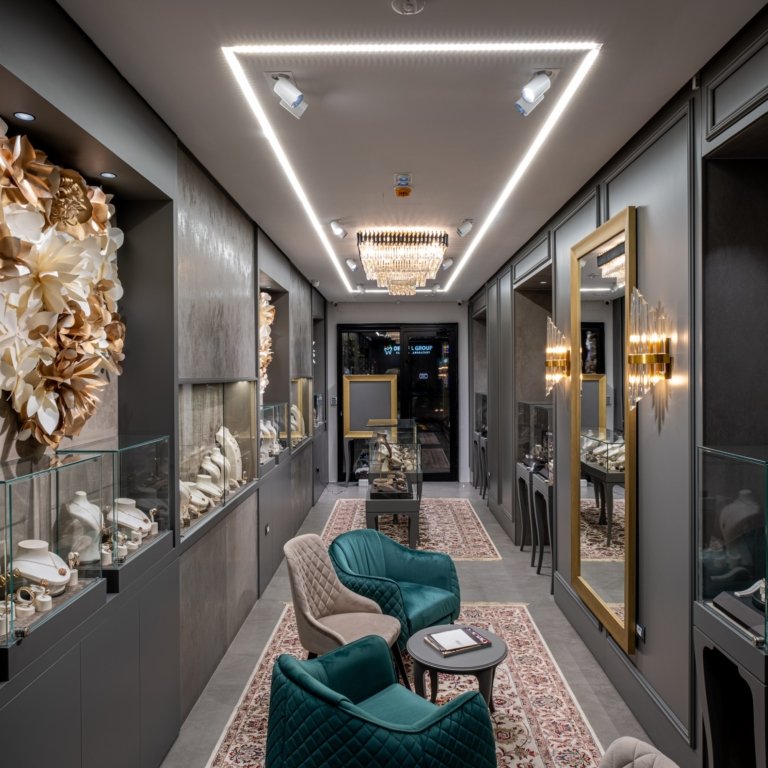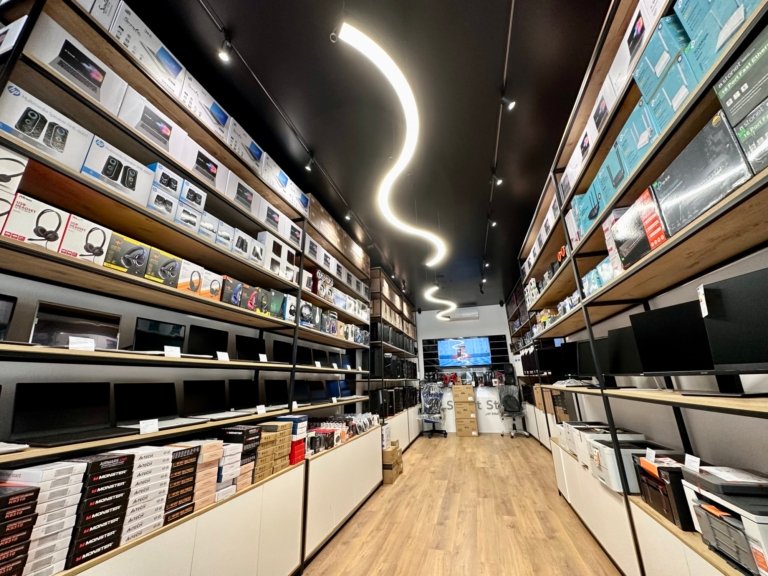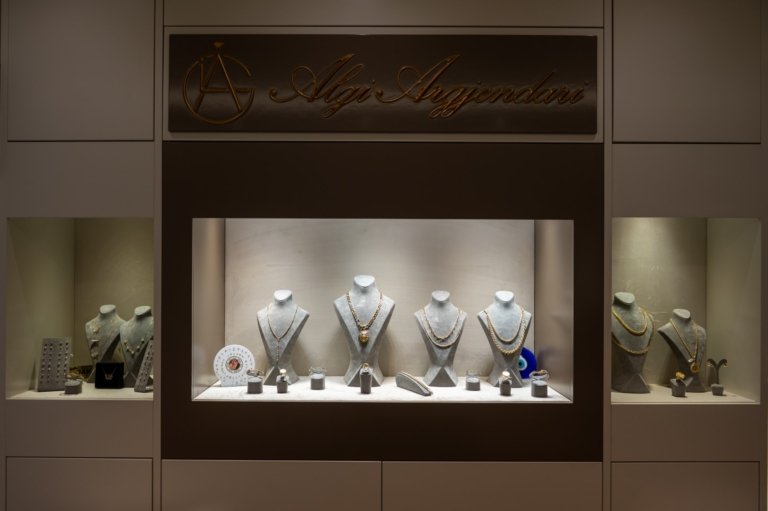
In retail, light does not illuminate the product. It sells it. And the difference between the two is measured in contrast, not in lux.
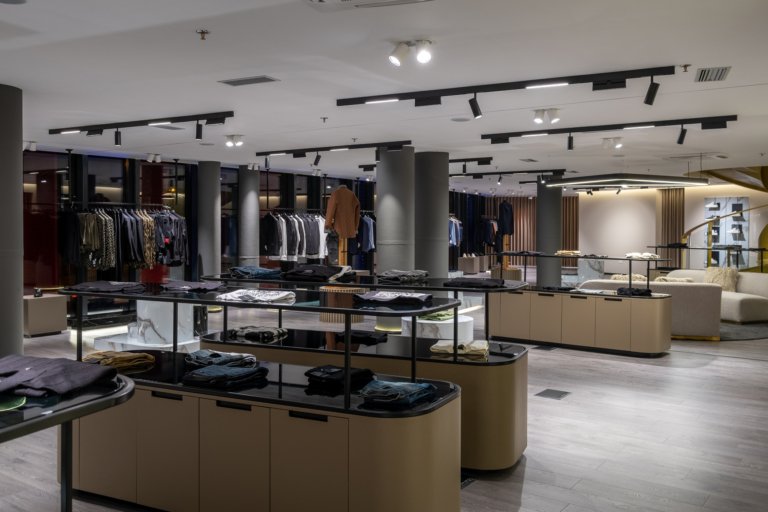
The eye goes where it is brightest. If everything is equally bright, the eye goes nowhere and the customer walks to the exit. A good showroom has a ratio of at least three to one between the product and its surroundings. That means the space has to be darker than most people expect — and that is exactly the part that takes nerve.
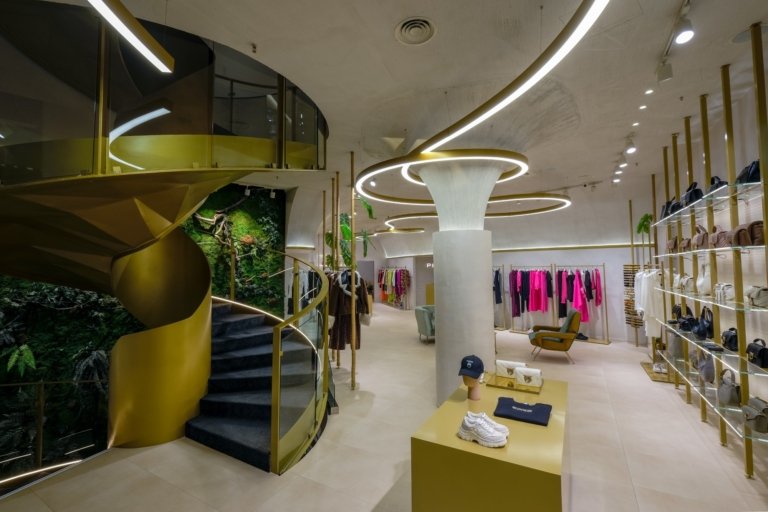
A dress that looks one colour in the shop and another at home is a return. In textiles, jewellery, cosmetics and furniture we specify CRI above 90, and often above 95 for precious metals, where R9 — the red component — also matters. At Teuta Gold and Argjendari Algi this was the decisive call of the whole project.
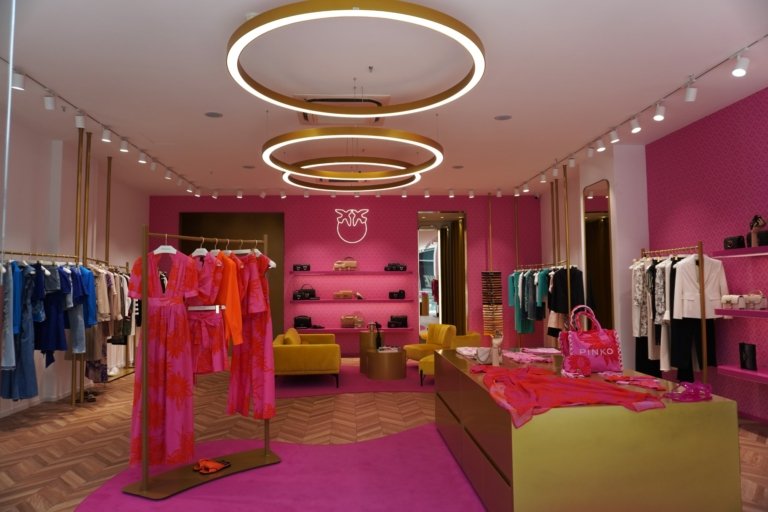
The window changes with the season, fixtures move, a new collection needs a different emphasis. So in retail the base system is track — magnetic or three-phase — which lets spots move, multiply and re-aim with no electrician and no work on the ceiling. At Monogram Arena and Pinko that was precisely the reason for the choice.
A window competes with the sun by day and with the street by night, so it needs far higher levels than the interior — and fixtures with good glare control, so the passer-by sees the product and not the lamp. At night the facade is what makes you visible from a distance; at Greg Beach Club and Teuta Gold the facade works as signage.
A shop on old halogen pays twice: once for the lighting energy and once for the air conditioning that removes its heat. Moving to LED with precise optics usually lowers both without losing any visual effect — often improving it.
The right question is not how much, but where. The ambient level can be modest; what has to be strong is the light on the product and in the window.
If a track system exists, yes — spots move and multiply within hours. If everything is recessed and fixed, every change means building work.
Yes. The window has the greatest impact for the smallest area, so we treat it separately from the rest of the shop, with its own fixtures and levels.
Send us the plan or a few photos. We will tell you what the space needs — not what the catalogue happens to have.