
Ndriçimi luan një rol thelbësor në ambjentet e shkollave dhe universiteteve.
Ai ndikon drejtpërdrejt në përqëndrim, energji, produktivitet dhe procesin e të nxënit.
Për të arritur rezultatet më të mira akademike, është thelbësore që ndriçimi të projektohet në mënyrë të tillë që të nxisë fokusin dhe angazhimin e studentëve.
Efektet e ndriçimit në institucionet arsimore
Në vijim, do të analizojmë disa nga mënyrat se si ndriçimi ndikon në performancën, sjelljen dhe mirëqenien e studentëve.
1. Ana vizuale dhe cilësia e ndriçimit
Shumë studentë kanë vështirësi në fokusim, gjurmim ose perceptim vizual.
Këtu hyn në lojë ndriçimi i mirë.
Dritat LED janë një zgjidhje ideale pasi nuk shkaktojnë fliker, nuk lodhin sytë dhe parandalojnë dhimbjen e kokës.
Nga ana tjetër, ndriçimi fluoreshent shpesh krijon efekt të kundërt: irritim vizual dhe shpërqëndrim.
Opsionet dimmable ndihmojnë mësuesit dhe studentët të përshtatin intensitetin e dritës, sipas aktivitetit.
Kjo fleksibilitet përmirëson ndjeshëm komfortin vizual në çdo orë të ditës.
2. Ritmi cirkadian dhe performanca ditore
Një nga faktorët më të rëndësishëm është ritmi cirkadian – ora e brendshme biologjike që rregullon gjumin, fokusin dhe energjinë.
Kur ndriçimi në shkolla nuk është në harmoni me ritmin natyral të trupit, fokusimi bie dhe lodhja rritet.
Sipas studimeve, studentët sot flenë mesatarisht dy orë më pak se më parë.
Arsyet kryesore janë mungesa e ekspozimit ndaj dritës natyrale dhe përdorimi i pajisjeve elektronike para gjumit.
Të dy faktorët ndikojnë drejtpërdrejt tek ritmi cirkadian dhe tek performanca gjatë orëve të mësimit.
Për më tepër, ndriçimi LED që simulon dritën e ditës mund të ndihmojë në balancimin e orarit biologjik dhe në rritjen e përqëndrimit.
3. Ndikimi në sjellje dhe gjendje emocionale
Ndriçimi ndikon jo vetëm në shikim, por edhe në gjendjen emocionale.
Kur drita është e përshtatur mirë, studentët janë më të qetë, më të fokusuar dhe më bashkëpunues.
Temperatura e dritës luan një rol të madh.
Një temperaturë e ftohtë (4000K) në mëngjes ndihmon trurin të zgjohet dhe rrit kujtesën dhe vëmendjen.
Sipas një studimi të universiteteve të Mississippi-t dhe Texas-it, ndriçimi i ftohtë ndihmon veçanërisht nxënësit hiperaktivë ose ata me vështirësi në të nxënë.
Shkollat që kanë instaluar LED me temperaturë të ftohtë raportuan përmirësim të dukshëm të humorit dhe sjelljes.
4. Ndriçimi dhe rezultatet akademike
Një eksperiment i vitit 2016 analizoi dy klasa me ndriçim të ndryshëm:
njëra me drita fluoreshente, tjetra me ndriçim LED që imitonte dritën natyrale.
Rezultati ishte i qartë:
studentët nën ndriçim LED ishin më të përqëndruar dhe arrinin rezultate më të larta në testime.
Kjo tregon se ndriçimi i mirë ndikon realisht në suksesin akademik.
5. Kursimi financiar dhe ndikimi në mjedis
Energjia elektrike është një nga shpenzimet më të mëdha të institucioneve arsimore.
Ndriçimi zë rreth 30–50% të kostove totale.
Përdorimi i produkteve LED mund të redukojë konsumin e energjisë deri në 70%.
Për më tepër, dritat LED kanë jetëgjatësi shumë të lartë dhe mirëmbajtje minimale.
Në tre vitet e fundit, çmimi i tyre është ulur me mbi 80%, duke e bërë ndërrimin edhe më të leverdisshëm.
Në këtë mënyrë, kur kursen energji, kursen edhe për planetin.
Shembull praktik: Universiteti i New York Tirana
Për të ilustruar efektin e ndriçimit në edukim, le të marrim shembullin e University of New York Tirana,
universiteti i parë privat në Shqipëri, themeluar në vitin 2002.
Jemi krenarë që Vitalux ka realizuar projektin e ndriçimit të godinës së re të këtij institucioni.
Produktet e përdorura
-
Profile profesionale të varura dhe tavanore
-
Spote cilindrike dhe të inkaso
-
Panele LED
-
Shina me spote të jashtme
-
Shirita LED
-
Profile LED të inkaso
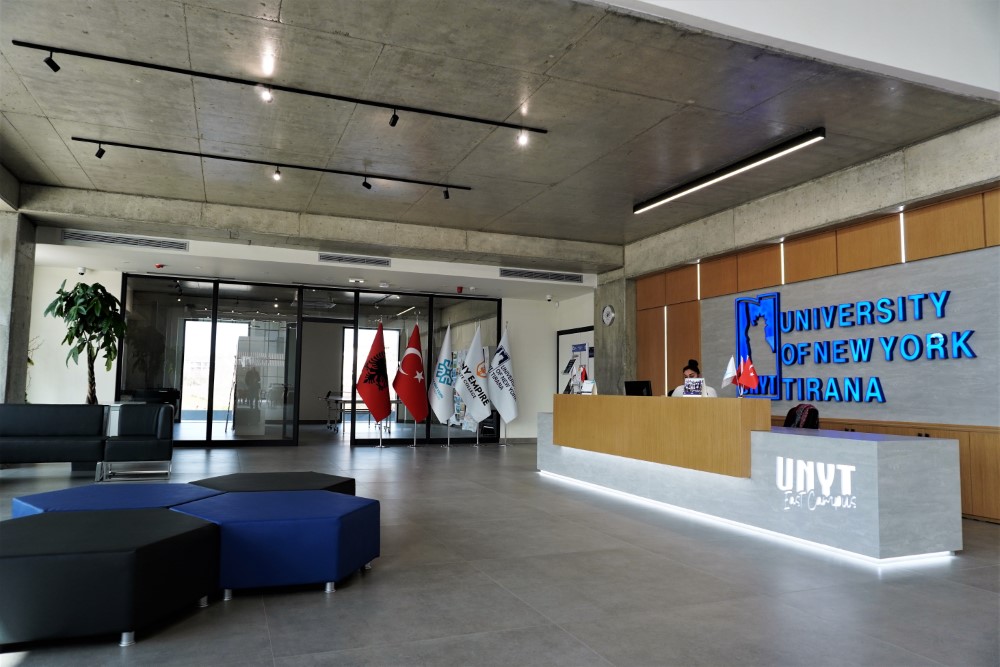
Recepsioni dhe hapësira e pritjes
Një nga elementët më të spikatur është profili inkaso i kombinuar me drurin e murit,
duke krijuar një kontrast elegant dhe një pikë fokale për logon e universitetit.
Shinat me spote të rregullueshme ofrojnë fleksibilitet të plotë për orientimin e dritës.
Ndërkohë, dritaret e mëdha lejojnë përfshirjen e dritës natyrale gjatë ditës,
duke e bërë hapësirën më të ngrohtë dhe më të gjallë.
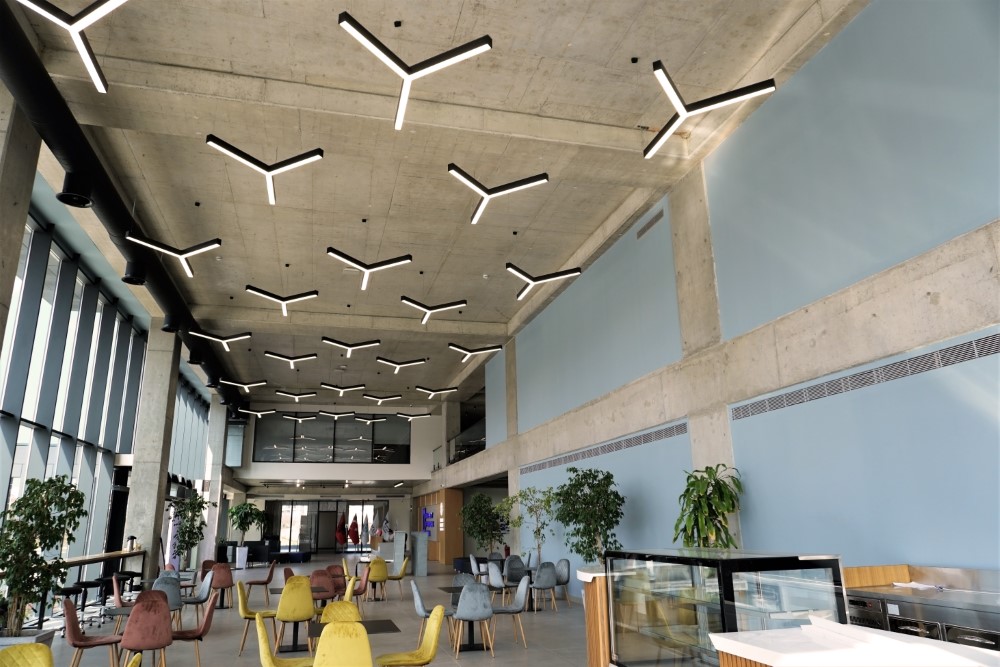
Ambjentet e pushimit dhe studimit
Profilet profesionale në formë “Y” janë zgjedhur për të pasqyruar vizualisht identitetin akademik të universitetit.
Ato krijojnë harmoni estetike dhe efikasitet të lartë ndriçimi.
Në ambiente të tilla, është thelbësore që ndriçimi të përshtatet me çdo aktivitet —
nga leximi deri te bashkëbisedimet apo pushimet.
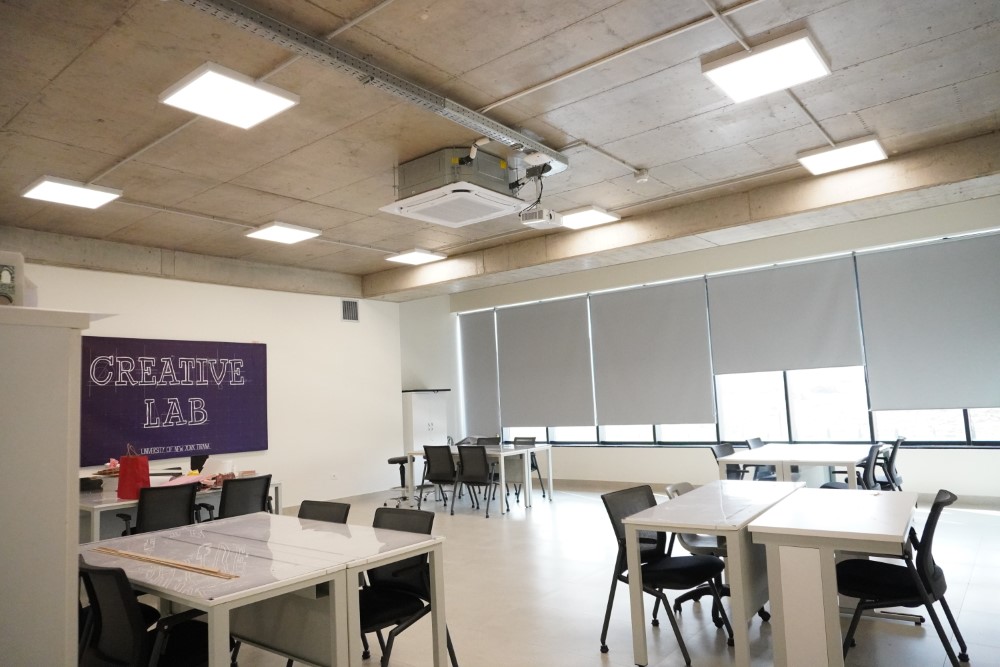
Klasat dhe laboratorët
Panelet LED janë zgjedhja ideale për hapësirat arsimore.
Ato ofrojnë ndriçim të butë, pa reflektime, duke rritur përqëndrimin dhe qartësinë vizuale.
Në laboratorë, tavolinat e përbashkëta dhe ndriçimi i pozicionuar me kujdes nxisin bashkëpunimin dhe komunikimin mes studentëve.
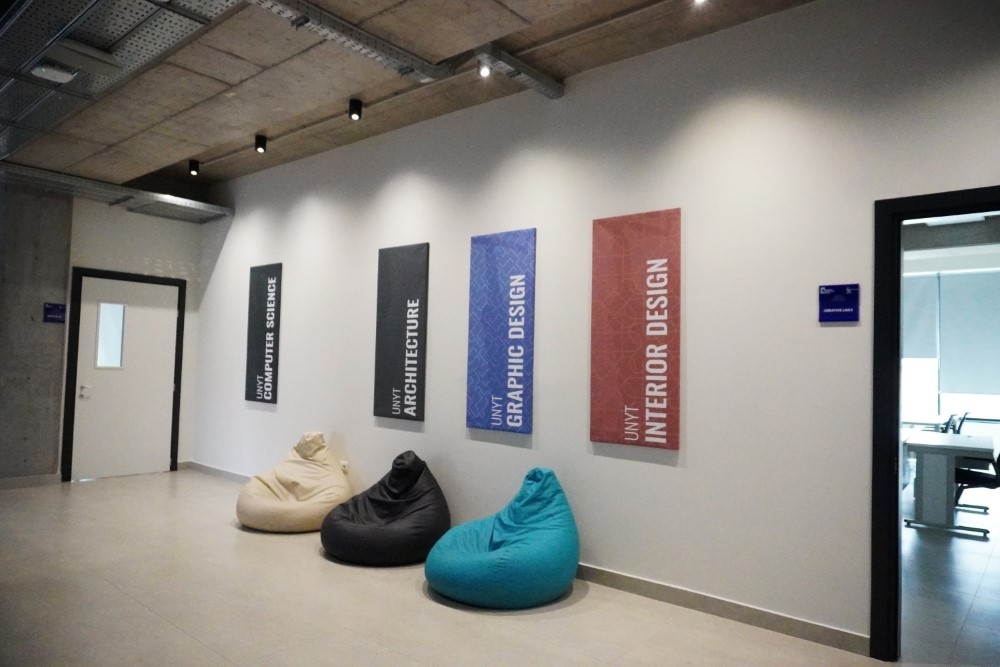
Korridoret dhe hapësirat kalimtare
Këto zona janë ndriçuar me spote inkaso të cilat “drejtojnë” dritën në rafte dhe zona orientimi.
Ky stil ndriçimi është minimalist dhe elegant, duke ruajtur qetësinë vizuale të projektit.
Në tërësi, University of New York Tirana është një nga projektet më të arrira të Vitalux,
ku funksioni, dizajni dhe drita bashkohen në mënyrë harmonike.