
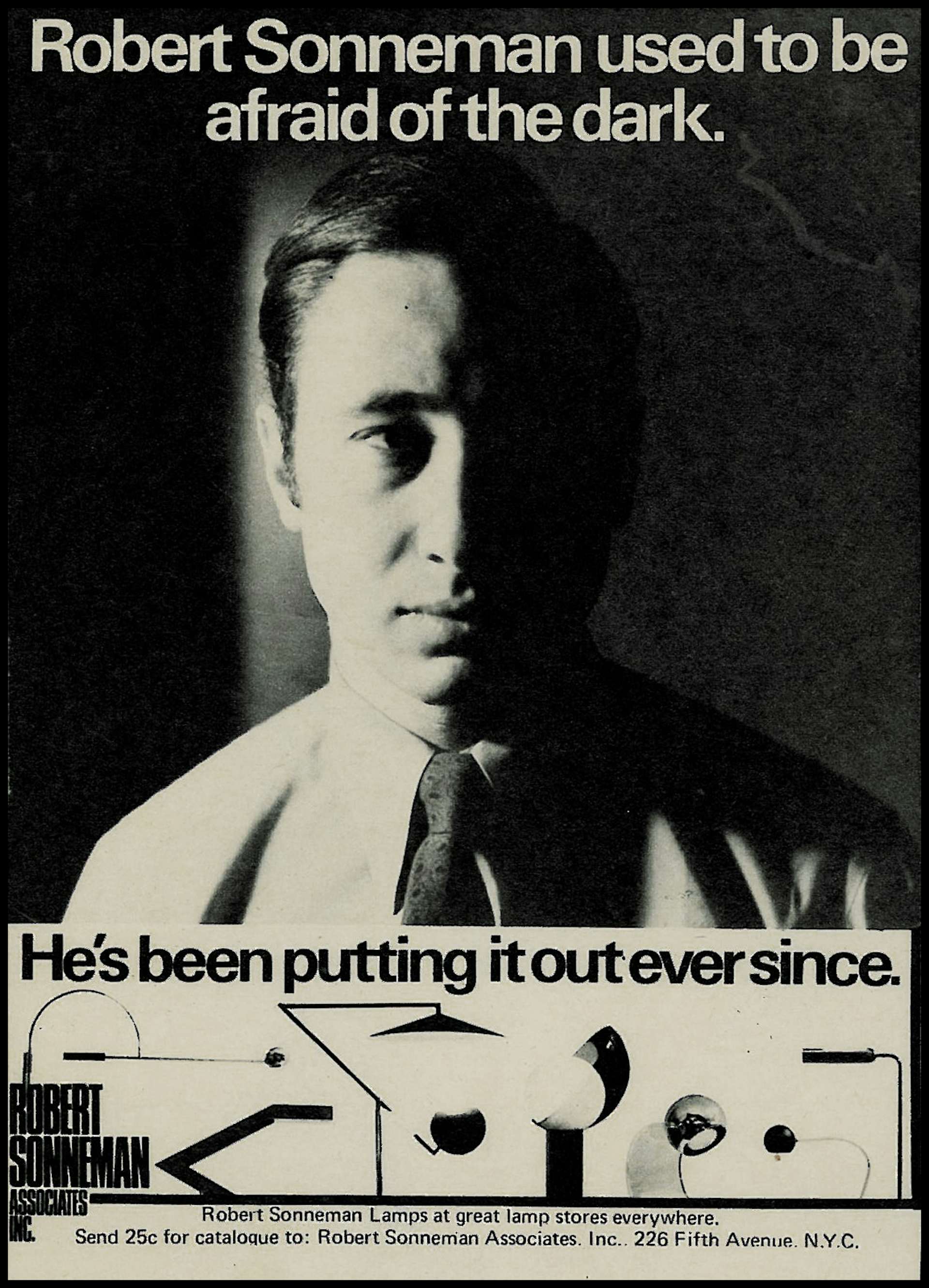
Robert Sonneman: The Visionary Who Turned Light into Art
In today’s article, we celebrate Robert Sonneman, the designer who transformed lighting into an art form in the 1960s. Known as a pioneer of modern lighting design, Sonneman shaped a legacy that continues to influence interiors and lighting manufacturers worldwide. His creations — bold yet minimal, architectural yet human — remain timeless icons of form and function.
From New York to Modernism: The Early Years
Born and raised in New York City, Sonneman developed a love for art from an early age. He studied at Rhodes Preparatory School in Manhattan and later at the Art Students League of New York, where he immersed himself in painting, sculpture, and composition.
After serving in the Navy, he joined a small lighting shop — a moment that changed the course of his life. Surrounded by lamps, fixtures, and customers fascinated by design, Sonneman discovered his passion for modernism and European minimalism.
At just 23 years old, he had already mastered the technical skills to engineer his own designs and opened his first lighting factory. What began as a local workshop soon became a global design name.
Six Decades of Design Excellence
Nearly sixty years later, Sonneman’s products remain as relevant as ever. Many of his early models have been reinterpreted with new technologies, proving that great design never goes out of style.
Sonneman’s philosophy rests on a simple but profound idea:
“Lighting design demands a deep commitment to technology, material knowledge, and manufacturing precision.”
His work draws inspiration from modern masters such as Marcel Breuer, Le Corbusier, and Mies van der Rohe, while also reflecting the industrial design purity of Porsche, Knoll, and Braun. This blend of architectural rigor and sculptural elegance defines his signature aesthetic.
Form, Function, and the American Modernist Spirit
Throughout his career, Sonneman has balanced form and function — turning lighting design into a sculptural art.
In the early 1970s, his advertisements for Bloomingdale’s revealed an American modernist style that was both minimal and cosmopolitan.
The Mushroom Table Lamp (1970s)
Among his most iconic pieces, the Mushroom table lamp embodied the clean lines of modernism. Made from spun aluminum and topped with a chrome-tipped bulb, it came in bold finishes such as mustard yellow. Though no longer in production, it remains a collector’s favorite.
The Orbiter Lamp (1967)
Another classic, the Orbiter lamp, designed in 1967, featured a mechanically inspired arc design that balanced movement and simplicity. It remains in production to this day, a testament to Sonneman’s enduring vision.
Suspenders: A Legacy of Innovation
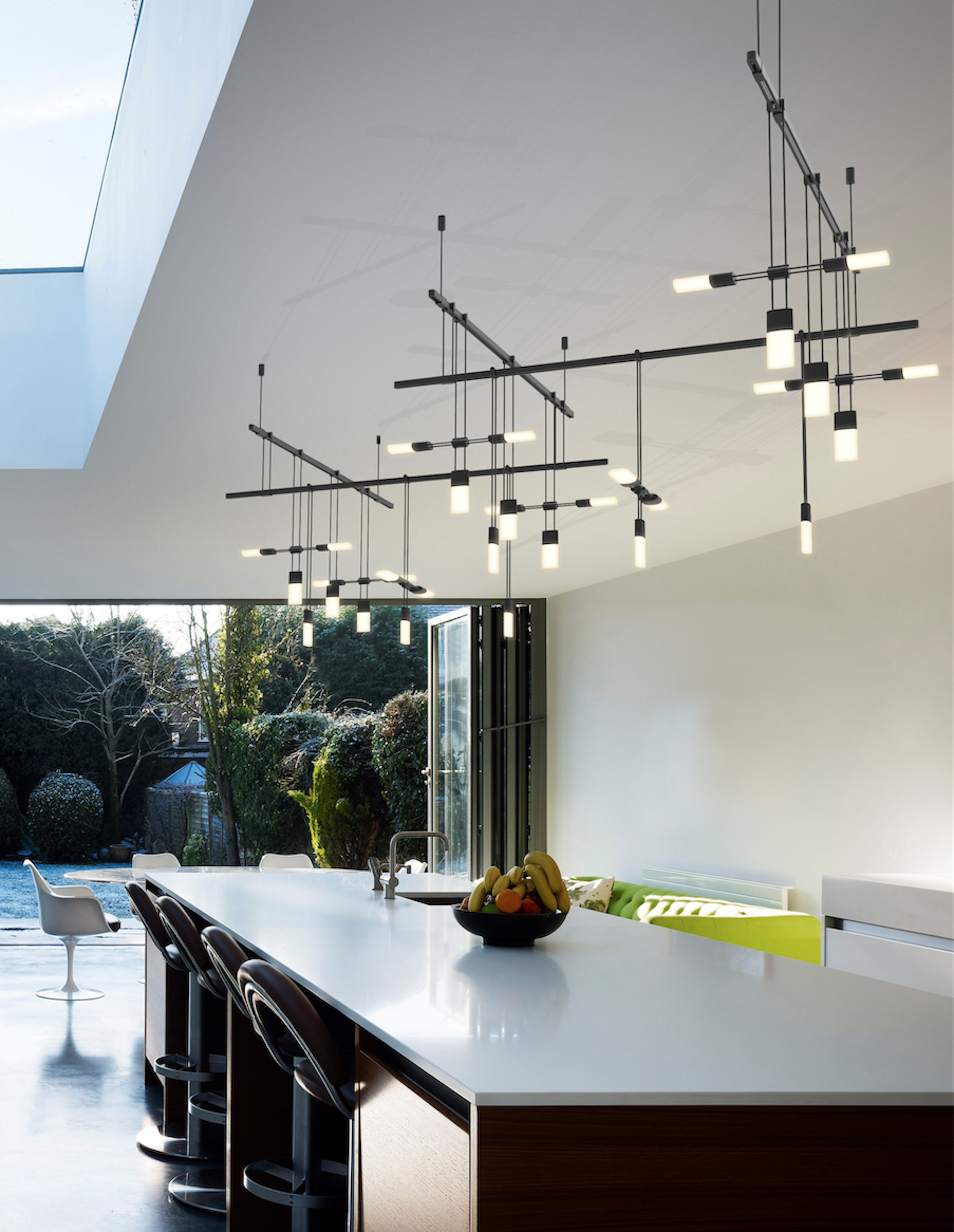
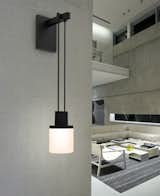
One of Sonneman’s most groundbreaking systems, the Suspenders collection, was originally conceived in 1989.
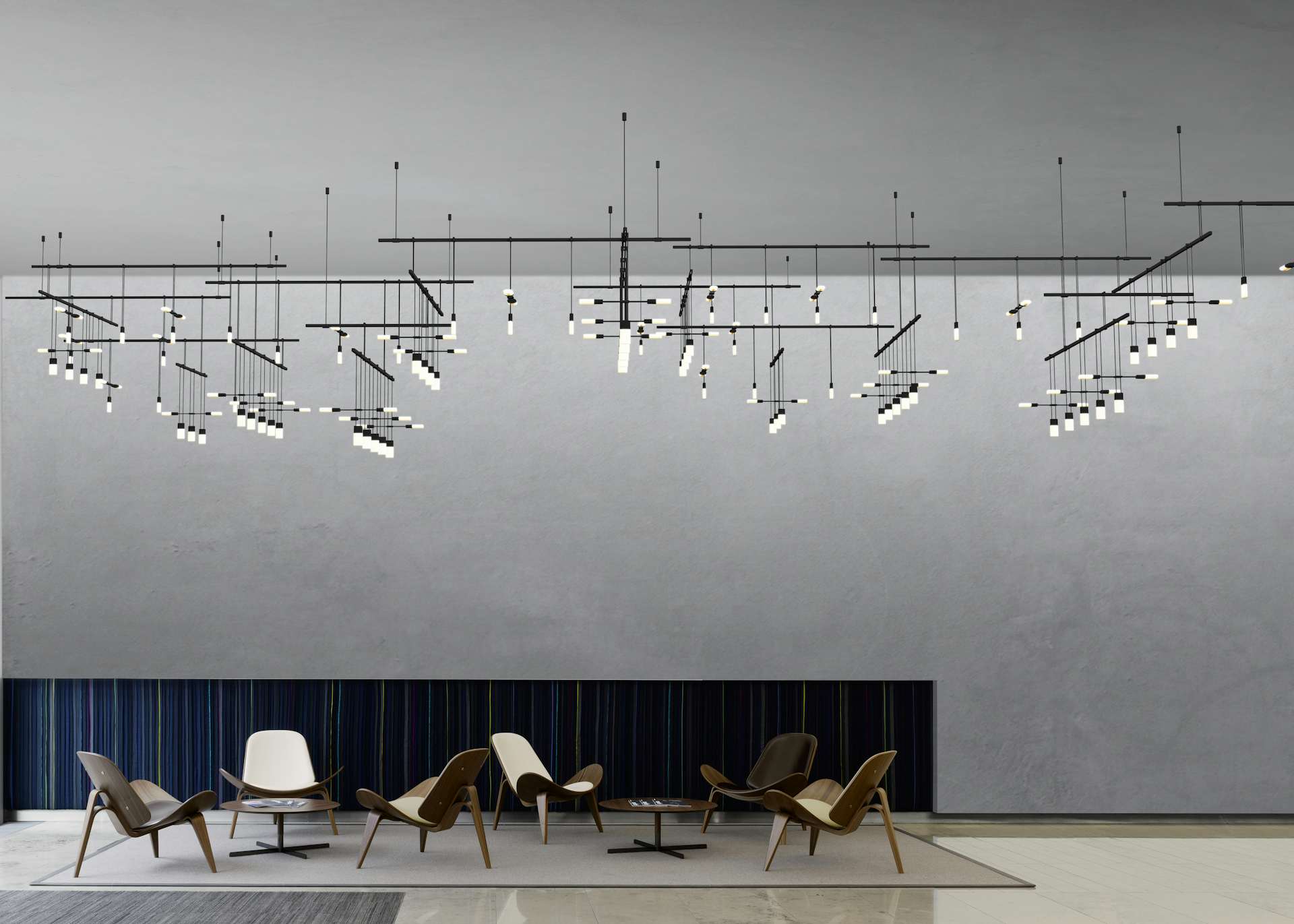
The design consists of interconnected linear arms supporting suspended luminaires, forming geometric configurations that are both functional and decorative.
With today’s LED technology, Suspenders has evolved into a versatile modular system — available in single drops, cluster formations, or a striking Tri-Bar configuration that suspends three 36″ linear power bars with integrated LEDs.
Unlike the halogen-heavy original, the modern Suspenders system delivers energy efficiency, minimal heat emission, and remarkable design flexibility.
New Frontiers: Inside-Out Collection
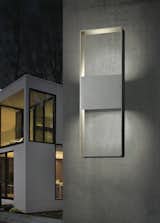
Never one to stand still, Sonneman continues to innovate. His Inside-Out collection marks his first venture into lighting that seamlessly bridges indoor and outdoor applications.
Among its standout designs is Light Frames, which projects light both upward and downward to create a halo-like architectural effect.
With such pieces, Sonneman continues to push the boundaries of what lighting can express — structure, atmosphere, and emotion.
A Lasting Legacy in Light
Robert Sonneman’s contribution to modern design goes far beyond lamps.
He transformed lighting into an architectural discipline, blending art, engineering, and poetry into every creation.
His vision lives on in contemporary interiors worldwide — and in every designer who believes that light is more than function; it’s an experience.

