
[av_four_fifth first min_height=” vertical_alignment=” space=” custom_margin=” margin=’0px’ row_boxshadow=” row_boxshadow_color=” row_boxshadow_width=’10’ link=” linktarget=” link_hover=” title_attr=” alt_attr=” padding=’0px’ highlight=” highlight_size=” border=” border_color=” radius=’0px’ column_boxshadow=” column_boxshadow_color=” column_boxshadow_width=’10’ background=’bg_color’ background_color=” background_gradient_color1=” background_gradient_color2=” background_gradient_direction=’vertical’ src=” background_position=’top left’ background_repeat=’no-repeat’ animation=” mobile_breaking=” mobile_display=” av_uid=’av-33chag’]
[av_textblock size=’16’ font_color=” color=” av-medium-font-size=” av-small-font-size=” av-mini-font-size=” av_uid=’av-lf87thc6′ custom_class=” admin_preview_bg=”]
Lighting in Schools and Universities – When Light Becomes Part of Learning
Lighting plays an essential role in school and university environments.
It directly affects focus, energy, productivity and the learning process.
To achieve the best academic results, it’s essential that lighting is designed to boost students’ focus and engagement.
The effects of lighting in educational institutions
Below, we’ll look at some of the ways lighting affects students’ performance, behavior, and wellbeing.
1. Visual quality and lighting quality
Many students struggle with focus, tracking, or visual perception.
This is where good lighting comes in.
LED lights are an ideal solution since they don’t cause flicker, don’t tire the eyes, and help prevent headaches.
On the other hand, fluorescent lighting often has the opposite effect: visual irritation and distraction.
Dimmable options help teachers and students adjust light intensity according to the activity.
This flexibility significantly improves visual comfort at any hour of the day.
2. Circadian rhythm and daily performance
One of the most important factors is the circadian rhythm – the internal biological clock that regulates sleep, focus, and energy.
When school lighting is out of sync with the body’s natural rhythm, focus drops and fatigue rises.
Studies show that students today sleep on average two hours less than before.
The main reasons are lack of exposure to natural light and the use of electronic devices before bed.
Both factors directly affect the circadian rhythm and performance during class hours.
Furthermore, LED lighting that simulates daylight can help balance the biological clock and increase focus.
3. Impact on behavior and emotional state
Lighting affects not only vision but also emotional state.
When light is well-suited, students are calmer, more focused, and more cooperative.
Light temperature plays a major role.
A cool temperature (4000K) in the morning helps the brain wake up and boosts memory and attention.
According to a study from the universities of Mississippi and Texas, cool lighting particularly helps hyperactive students or those with learning difficulties.
Schools that installed cool-temperature LEDs reported a noticeable improvement in mood and behavior.
4. Lighting and academic results
A 2016 experiment analyzed two classrooms with different lighting:
one with fluorescent lights, the other with LED lighting that mimicked natural light.
The result was clear:
students under LED lighting were more focused and achieved higher test scores.
This shows that good lighting genuinely impacts academic success.
5. Financial savings and environmental impact
Electricity is one of the largest expenses for educational institutions.
Lighting accounts for about 30–50% of total costs.
Using LED products can reduce energy consumption by up to 70%.
Furthermore, LED lights have a very long lifespan and minimal maintenance.
Over the last three years, their price has dropped by over 80%, making the switch even more worthwhile.
In this way, when you save energy, you also save for the planet.
Practical example: New York University Tirana
To illustrate the effect of lighting on education, let’s look at the example of New York University Tirana,
the first private university in Albania, founded in 2002.
We’re proud that Vitalux carried out the lighting project for the institution’s new building.
Products used
-
Professional suspended and ceiling profiles
-
Cylindrical and recessed spotlights
-
LED panels
-
Outdoor track spotlights
-
LED strips
-
Recessed LED profiles
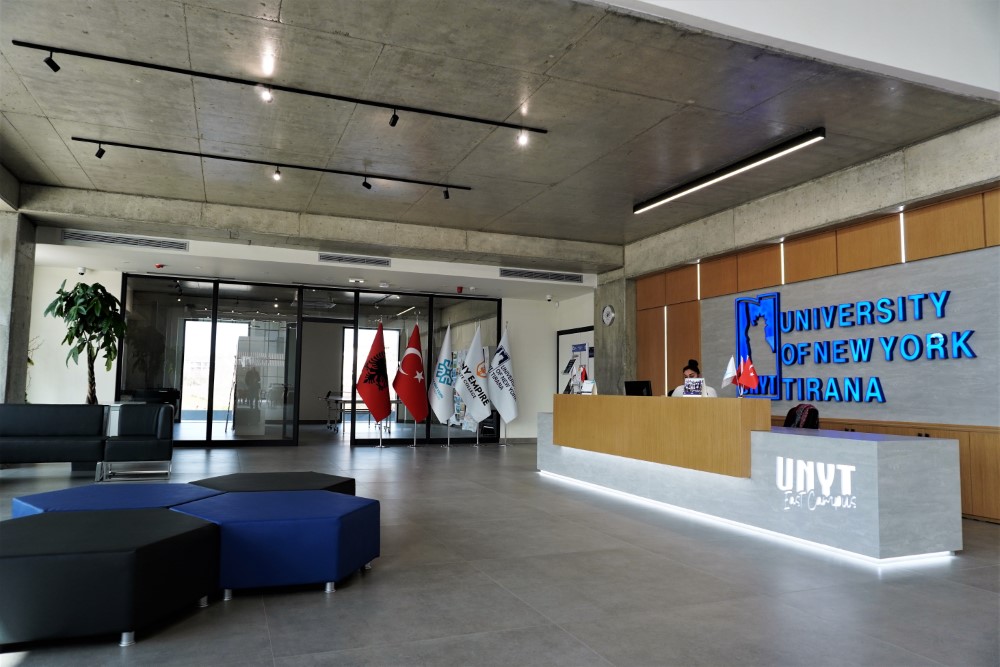
Reception and waiting area
One of the most striking elements is the recessed profile combined with wood-textured wall panels,
creating an elegant contrast and a focal point for the university’s logo.
The adjustable spotlight tracks offer full flexibility for directing light.
Meanwhile, the large windows allow natural daylight to fill the space,
making it warmer and more alive.
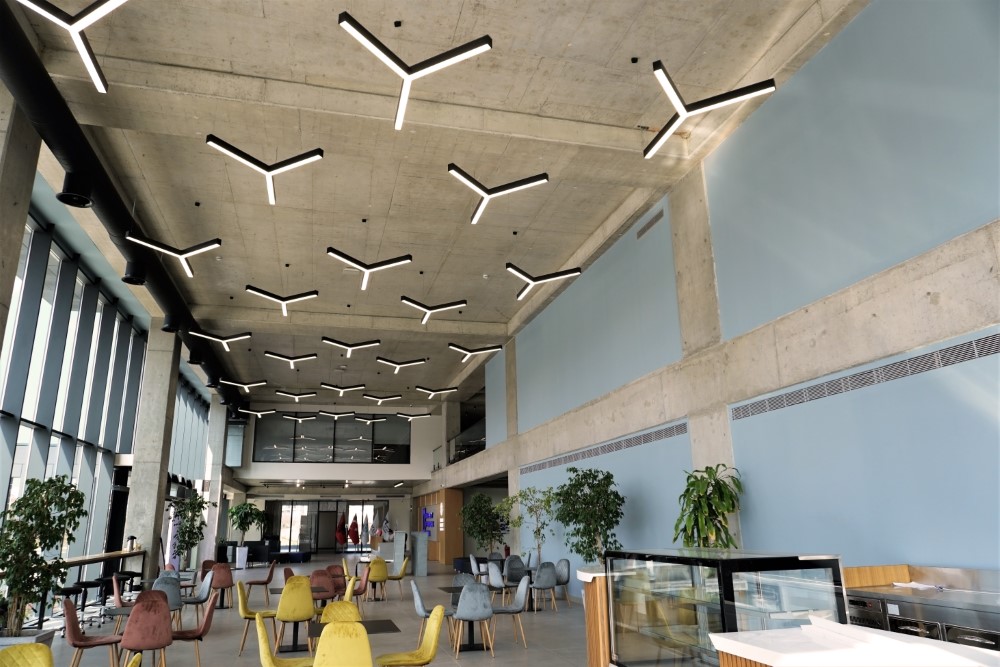
Break and study areas
Professional “Y”-shaped profiles were chosen to visually reflect the university’s academic identity.
They create aesthetic harmony and high lighting efficiency.
In spaces like these, it’s essential that lighting adapts to every activity —
from reading to conversation or relaxing.
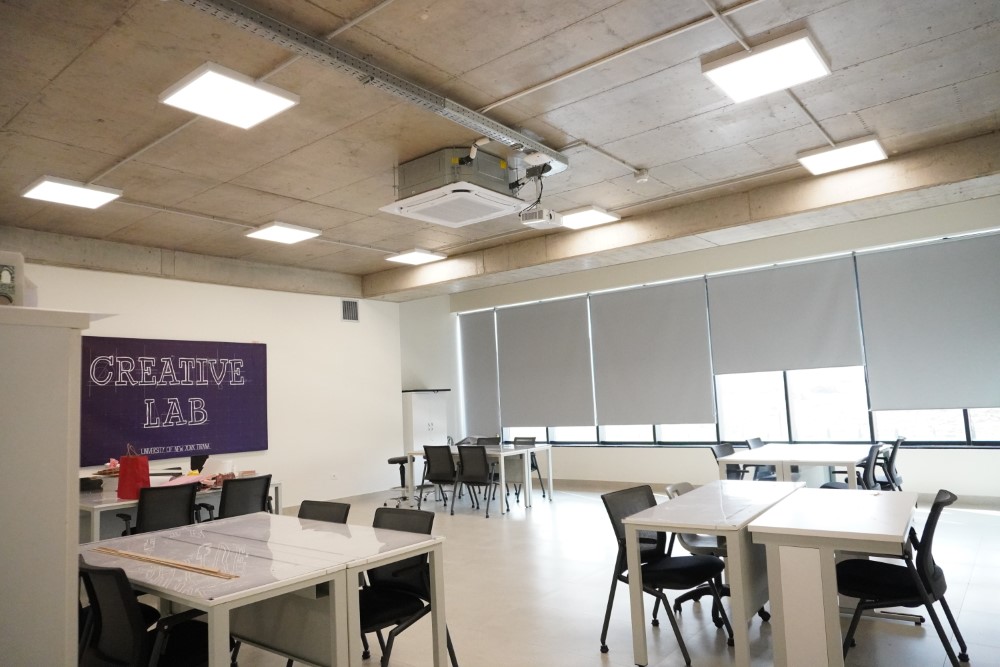
Classrooms and laboratories
LED panels are the ideal choice for educational spaces.
They provide soft, glare-free lighting, improving focus and visual clarity.
In laboratories, shared tables and carefully positioned lighting encourage collaboration and communication among students.
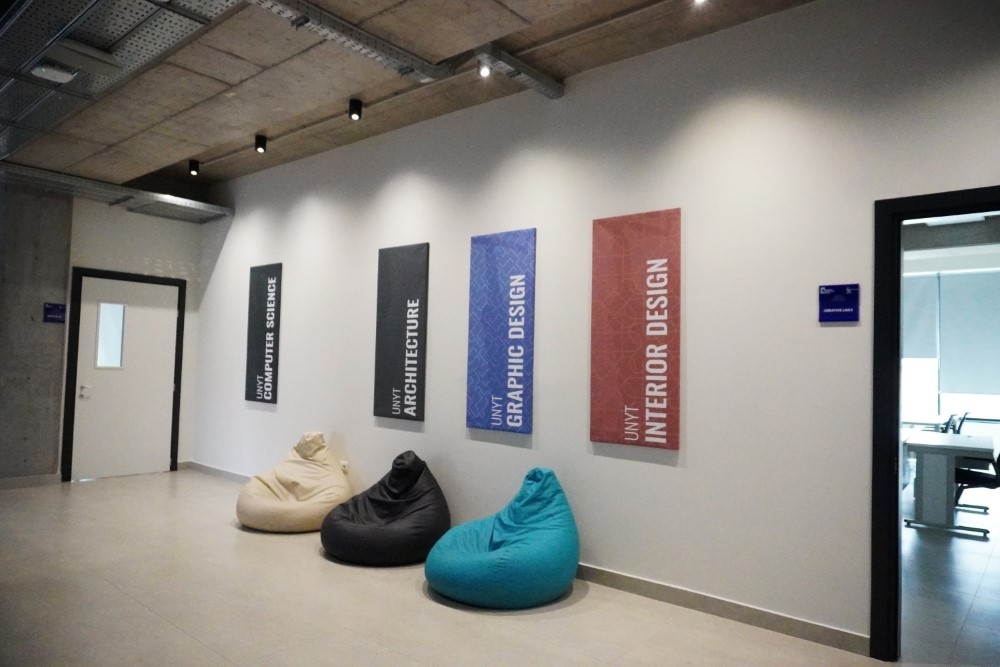
Corridors and transitional spaces
These areas are lit with recessed spotlights that “direct” light toward shelves and orientation zones.
This lighting style is minimalist and elegant, preserving the project’s visual calm.
Overall, New York University Tirana is one of Vitalux’s most accomplished projects,
where function, design, and light come together harmoniously.
Carefully thought out down to the smallest detail, ‘New York University Tirana’ can be considered one of the best-lit projects by our company, tailored to its profile.
To get a clear idea, see the project below:
https://www.vitalux.al/en/new-york-university-tirana/
[/av_textblock]
[/av_four_fifth]