
Why outdoor lighting matters more than ever
As the world reopens and people return to social life, dining outdoors has become a lasting preference.
Restaurants that once focused mainly on interior design are now investing heavily in outdoor environments. Terraces, patios, and open-air courtyards have become essential parts of the dining experience — and so has the importance of lighting.
The key ingredients of restaurant lighting design
The Appetizer: Security
Before lighting can be beautiful, it must be functional. The first purpose of light is visibility and safety.
Well-lit paths, steps, and parking areas prevent accidents and make guests feel welcome and secure.
Step lighting is a great example: it discreetly illuminates pathways while blending into the design.
For entrances and parking lots, high ambient LED fixtures ensure clear visibility without harsh glare.
Security lighting is not just practical — it’s part of a guest’s comfort and confidence from the moment they arrive.
The Main Course: Performance and Controls
Once safety is ensured, the focus turns to ambiance. Lighting performance defines the mood and emotional tone of the dining experience.
Warm color temperatures (2000K–4500K) are ideal for restaurants, as they create inviting hues that make food look more appetizing and guests feel relaxed.
Warmer tones add depth and softness, while cooler tones can make objects appear flat and lifeless.
Modern LED lighting systems offer advanced control. With mobile apps or smart controls, managers can adjust brightness, color, and temperature to match the time of day or event.
From lunch service to evening cocktails, programmable dimming helps maintain the perfect ambiance — all while saving energy and reducing costs.
When choosing fixtures, consider glare reduction, beam spread, and light distribution to maintain comfort and visual harmony.
Dessert: Lighting Design
Finally, lighting is not just technical — it’s artistic. It can either blend quietly into the architecture or become the centerpiece of design.
Architectural lighting often uses minimal, hidden fixtures like downlights to create soft ambient illumination.
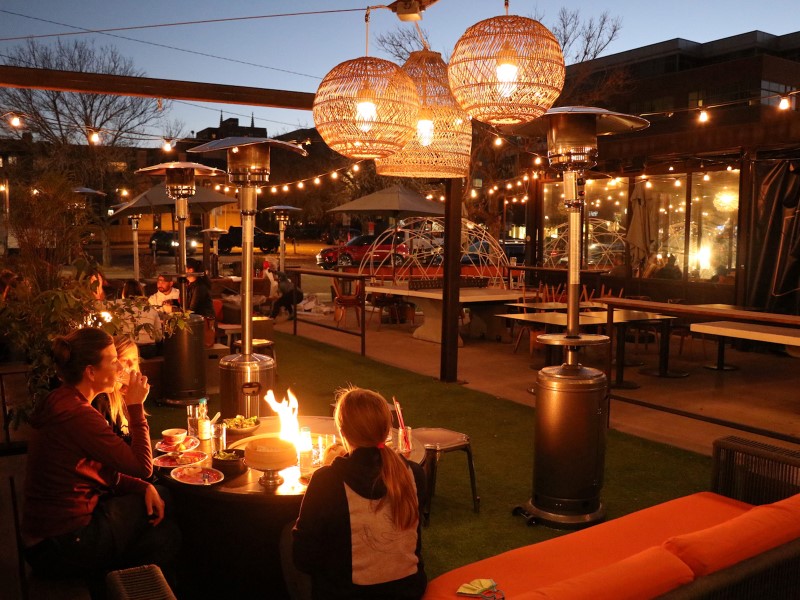
Decorative lighting, on the other hand, acts as a visual accent: pendant fixtures, garden path lights, string LEDs, or landscape uplights can all elevate the atmosphere and add sophistication.
Lighting designers often highlight focal points — the bar, stage, or central fountain — by combining uplights and downlights for depth and drama.
When designed intentionally, lighting becomes part of the restaurant’s identity — enhancing its elegance, style, and memorability.
In Conclusion – Lighting that keeps customers coming back
Lighting can make or break a restaurant’s atmosphere.
It’s not just about visibility — it’s about creating emotion, comfort, and connection.
Guests may not always notice great lighting, but they’ll always feel its effect.
Well-designed outdoor lighting for restaurants enhances security, saves energy, and turns every dinner into an experience worth repeating.
info@vitalux.al | +355 67 600 0088 / +355 67 600 0073
Based on https://blog.1000bulbs.com/home/whats-on-the-menu-for-commercial-outdoor-lighting-in-restaurant-spaces